
India vs Vietnam for Textile Sourcing in 2026
Both are top China alternatives for apparel and home textiles. Here is how they actually differ on craft, scale and trade access.
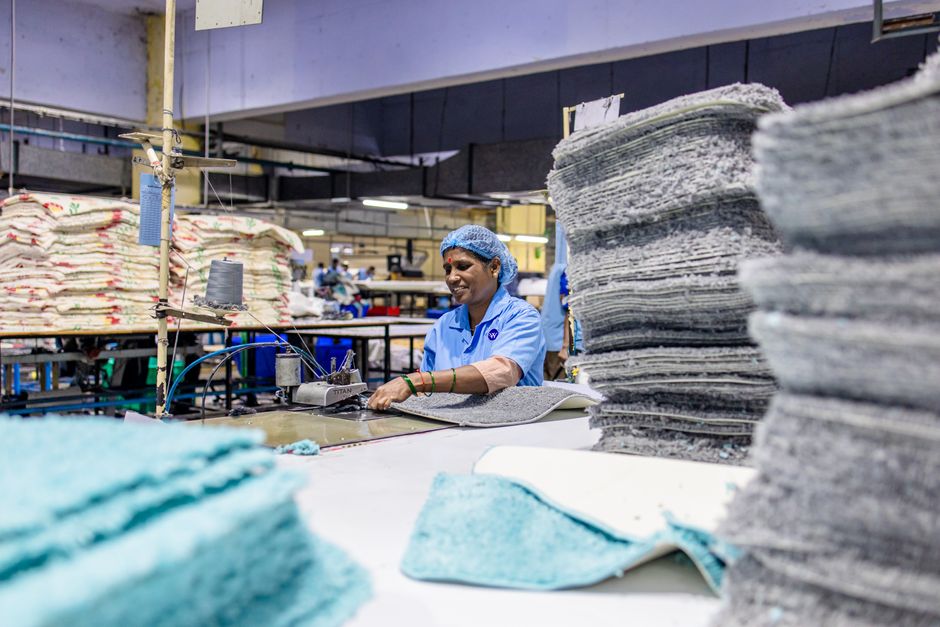
For importers reducing dependence on China, India and Vietnam are often the two most serious alternatives on the shortlist. Both supply global apparel and textile markets, both have established export ecosystems, and both can support large international buyers. Yet treating them as interchangeable sourcing destinations is a common mistake.
The practical differences are not primarily about which country is "better." They are about category fit. Vietnam has built strengths around high-volume manufacturing, synthetic-blend products, technical apparel, and vertically integrated factory operations. India's advantages come from natural fibres, deep textile traditions, domestic access to cotton and silk, and manufacturing ecosystems that combine industrial production with specialized hand processes. Understanding those differences can help buyers build a sourcing strategy that aligns with product requirements, target customers, and supply-chain priorities.
Why the India vs Vietnam Decision Matters
When sourcing textiles, buyers are rarely purchasing a generic product. Fabric composition, production methods, design requirements, order volumes, and brand positioning all influence supplier selection.
A retailer selling performance activewear faces different sourcing requirements than a home-textile brand focused on handcrafted cotton furnishings. Likewise, a fashion label built around artisan detailing has different supplier needs than a mass-market apparel importer prioritizing speed and standardized production.
India and Vietnam sit at different points on this spectrum.
- Vietnam is often a strong fit for high-volume, factory-driven apparel production.
- India is often a strong fit for natural-fibre textiles, craft-intensive products, and collections where material provenance matters.
- Many buyers ultimately use both countries for different product categories.
Raw Material Base: One of India's Most Important Advantages
One of the clearest distinctions between the two countries is India's domestic raw-material ecosystem.
India grows its own cotton and produces its own silk. For buyers sourcing cotton apparel, cotton home textiles, silk garments, scarves, or decorative textile products, this creates a supply chain with strong domestic foundations.
This matters for several reasons:
- Closer links between fibre production and manufacturing.
- Access to a wide range of cotton-based product categories.
- Established silk-producing and silk-weaving traditions.
- Opportunities to communicate fibre origin and textile heritage to end customers.
For brands that position products around natural materials, fibre authenticity, or traditional textile craftsmanship, India's raw-material base can become part of the product story rather than simply a sourcing input.
Vietnam, by contrast, is generally known more for manufacturing efficiency and production capability than for a domestic identity centered on cotton and silk production.
Vietnam's Strength: High-Volume Apparel Manufacturing
Vietnam has developed a reputation for large-scale apparel manufacturing supported by vertically integrated factory operations.
For buyers, vertical integration can simplify coordination between production stages and support efficient execution of standardized apparel programs.
Vietnam is particularly well aligned with:
- Large-volume apparel orders.
- Synthetic and synthetic-blend garments.
- Technical apparel categories.
- Programs where manufacturing consistency is a primary requirement.
- Supply chains that depend on short lead times.
If the sourcing objective is to produce substantial volumes of performance apparel, synthetic outerwear, or technically specified garments, Vietnam is often a natural candidate for supplier evaluation.
This does not mean India cannot produce large orders. Rather, Vietnam's manufacturing profile is especially aligned with factory-driven apparel categories where scale, integration, and speed are major decision factors.
India's Strength: Natural Fibres and Textile Diversity
India's textile sector stands out for the breadth of products that can be made using natural fibres and specialized textile techniques.
For importers, this diversity creates opportunities that are difficult to replicate through purely industrial production systems.
India is particularly strong in:
- Cotton apparel.
- Cotton home textiles.
- Silk products.
- Decorative textiles.
- Fashion collections requiring artisanal detailing.
- Products where fabric character is a key selling point.
Many buyers discover that India's advantage is not merely production capacity but the range of textile expressions available within the country. Different regions support distinct weaving, dyeing, printing, and embellishment traditions that can add differentiation to a product line.
For brands competing on design uniqueness rather than pure price competition, this can be a meaningful sourcing advantage.
Hand Processes: Where India Offers Capabilities Vietnam Does Not Replicate in the Same Way
A major sourcing distinction lies in hand-based textile production.
India has long-established ecosystems for processes such as:
- Block printing.
- Embroidery.
- Handloom weaving.
These techniques are not simply heritage crafts. They remain commercially relevant for apparel, accessories, home furnishings, and premium textile collections.
For example, a home-textile importer sourcing printed cotton cushion covers or table linens may value the visual variation and character associated with block printing. Similarly, a fashion brand may use embroidery as a defining design element rather than a decorative afterthought.
Handloom fabrics can also appeal to buyers seeking texture, authenticity, and differentiation from mass-produced textiles.
Vietnam's strengths generally lie elsewhere: industrial manufacturing systems, technical apparel production, and high-volume factory output. As a result, buyers whose products depend heavily on artisanal textile techniques often find India to be the more suitable sourcing destination.
Provenance and Product Storytelling
Increasingly, importers are not only sourcing products—they are sourcing stories that support brand positioning.
India offers unusual depth in this area through recognized textile traditions, geographically linked weaving practices, and regional manufacturing specializations.
Two frameworks are especially relevant.
GI-Tagged Textile Traditions
India has a range of GI-tagged textile and weaving traditions that connect products to specific regions and production methods. Buyers interested in provenance-focused sourcing can explore these textile identities through India's GI-tag ecosystem.
For brands targeting consumers who value authenticity, traceability of tradition, and regional craftsmanship, GI-linked products can provide meaningful differentiation.
ODOP Manufacturing Clusters
India's One District One Product (ODOP) initiative highlights district-level specializations across the country.
For sourcing teams, this can simplify the process of identifying regions with established expertise in particular textile categories and production techniques.
Rather than searching broadly across an entire country, buyers can focus on clusters already associated with specific products and manufacturing skills.
Home Textiles: A Category Where India Is Often a Strong Contender
Home textiles deserve separate consideration because category requirements differ from apparel.
Many home-textile buyers prioritize:
- Natural fibres.
- Fabric feel and texture.
- Decorative techniques.
- Design variation.
- Artisan finishing.
These requirements align closely with many of India's established capabilities.
Products such as cotton-based furnishings, decorative textiles, embroidered items, handloom products, and printed home collections frequently benefit from India's combination of material access and craft expertise.
Vietnam remains a significant manufacturing destination, but buyers whose collections depend on handcrafted aesthetics often find more relevant supplier ecosystems in India.
Apparel: Match the Country to the Product Type
For apparel sourcing, product segmentation is often more useful than country-level comparisons.
Consider the following framework:
- Performance apparel: Vietnam is often a strong candidate due to its experience with synthetic blends, technical garments, and large-scale production.
- Basic high-volume apparel: Vietnam's vertically integrated manufacturing model may align well with standardized programs and shorter lead-time requirements.
- Cotton-focused apparel: India's domestic cotton base can be an important advantage.
- Silk apparel and accessories: India's silk production ecosystem makes it a natural sourcing destination for many categories.
- Craft-driven fashion: India's embroidery, handloom, and printing capabilities frequently make it the stronger fit.
Instead of asking whether India or Vietnam is better for apparel, buyers should ask which country is better for the specific garment they intend to source.
Should Buyers Source From Both Countries?
In many cases, yes.
Multi-country sourcing strategies often work best when each country is assigned product categories that match its strengths.
For example:
- Technical sportswear sourced from Vietnam.
- Cotton resortwear sourced from India.
- Synthetic outerwear sourced from Vietnam.
- Hand-embroidered fashion pieces sourced from India.
- Industrial-scale apparel basics sourced from Vietnam.
- Craft-oriented home textiles sourced from India.
This approach allows buyers to reduce concentration risk while taking advantage of the capabilities each sourcing destination offers.
Key Questions to Ask Before Choosing India or Vietnam
Before starting supplier outreach, sourcing managers should evaluate:
- Is the product primarily natural fibre or synthetic?
- Does the product require hand processes such as embroidery, block printing, or handloom weaving?
- Is manufacturing speed the highest priority?
- Will the product be sold on technical performance features or material authenticity?
- Does provenance contribute to brand value?
- Is the order driven by scale and standardization or by differentiation and craftsmanship?
The answers often point naturally toward one sourcing destination or the other.
Final Assessment
India and Vietnam are both credible alternatives for textile sourcing, but they excel in different areas. Vietnam's strengths are high-volume apparel manufacturing, synthetic-blend products, technical garments, vertically integrated production, and short lead times. India's strengths are natural fibres, domestic cotton and silk production, hand processes such as block printing and embroidery, handloom textiles, and provenance linked to regional textile traditions.
For most importers, the decision is not India versus Vietnam in absolute terms. It is matching the right country to the right product. The next step is to evaluate suppliers by category and capability, compare sourcing options directly through supplier comparisons, and explore relevant Indian textile clusters and products through the MadeFromIndia platform.