
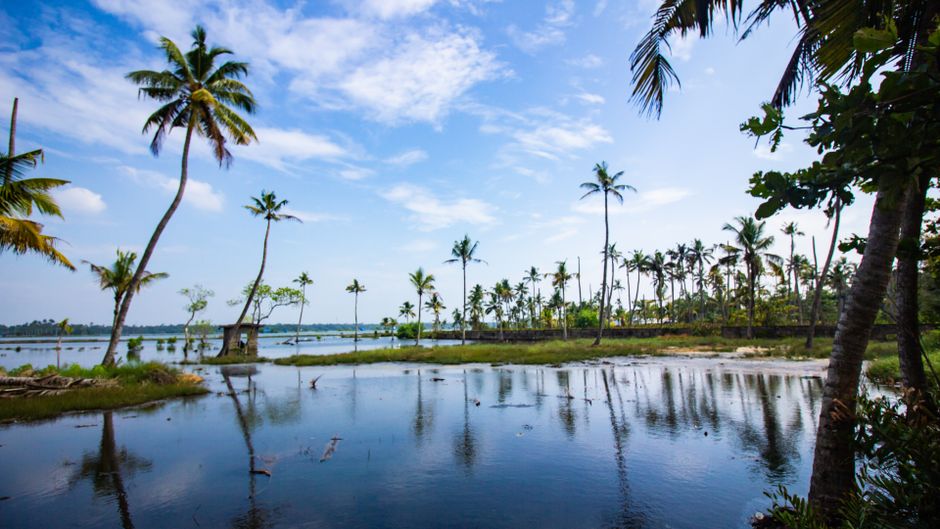
Kerala
The spice coast — cardamom, pepper and the world's coir industry, plus cashew, seafood and Ayurveda.
- Sourcing hubs
- 1
- Region
- South
Why source from Kerala
Kerala runs on trade the way other states run on factories. The Malabar coast was exporting pepper to Rome before the Common Era, and the modern state still behaves like a trading economy: plantation crops come down from the Western Ghats, processing happens in specialised district clusters, and everything funnels toward Kochi — home of Cochin Port, the Vallarpadam transshipment terminal and the headquarters of both the Spices Board of India and the Coir Board.
That history shapes what Kerala is good at selling the world today: cardamom and black pepper, coir and coconut products, cashew kernels, seafood, and the raw materials and finished formulations of the global Ayurveda market.
What the districts actually make
Kerala's supply chains are district-specific to a degree that surprises first-time buyers. Alappuzha is the centre of the world coir trade — its ODOP designation is coir, and the belt from Cherthala to Kollam spins coconut husk into yarn, doormats, geotextiles and woven flooring. Kollam is India's historic cashew-processing capital, drawing raw nuts from Africa and shipping graded kernels to snack brands worldwide. Kannur weaves handloom fabric (its ODOP product) with a furnishing-export tradition; Wayanad grows high-altitude coffee; and the Idukki hills produce the small green cardamom that commands the world's highest auction prices.
Thrissur, the hub we profile in depth, is the state's craft-metal centre — gold jewellery, bell-metal lamps and vessels, and the geographically protected Aranmula Kannadi, a front-surface metal mirror made by a single lineage of families in one village. Kerala holds a dense roster of GI registrations: Aranmula Kannadi, Onattukara sesame, Attappady thuvara, Kodungallur pottuvellari and dozens more — useful origin stories for retail brands that trade on provenance.
Spices, seafood and Ayurveda
Spices remain the flagship. Cardamom is auctioned under Spices Board supervision at Puttady in Idukki; pepper, ginger and turmeric move through Kochi's terminal markets. Buyers get an ecosystem — graders, fumigators, steam-sterilisation units, ASTA-spec cleaning lines — that only a century-old trade builds up.
The seafood sector works the same way: pre-processing yards and EU-approved export units around Aroor and Kochi handle shrimp, cuttlefish and value-added frozen lines, supported by state and central marine-products institutions headquartered in the city. Ayurveda completes the picture — Kerala is the discipline's historic home, and its GMP-certified manufacturers private-label oils, supplements and personal-care lines for wellness brands in the US, EU and Gulf.
Logistics: one port to rule them
Almost everything exportable in Kerala is within a half-day truck run of Cochin Port, and the Vallarpadam ICTT lets containers ship direct rather than transshipping via Colombo. For agri, marine and natural-fibre cargo — categories where documentation, phytosanitary certification and cold-chain discipline decide outcomes — Kochi's forwarder and CHA community handles these products daily, which materially lowers first-shipment risk for new importers.
Who should source here
Kerala is the wrong answer for high-volume industrial manufacturing — that's Tamil Nadu or Gujarat. It is the right answer for spice importers, coir and natural-fibre distributors, food-ingredient buyers, seafood importers, and wellness brands looking for credible Ayurveda manufacturing. In a China-plus-one portfolio, Kerala covers the origin-story categories: products whose value comes from where and how they're made, backed by two thousand years of export practice.
Sourcing hubs in Kerala
More sourcing hubs in South India
Established export clusters near Kerala you can source from today.
Home Textile City · Tamil Nadu
Karur
Home textiles & made-ups
Kutti Japan · Tamil Nadu
Sivakasi
Offset printing, safety matches & fireworks
Heritage & Silk City · Karnataka
Mysuru
Mysore silk, sandalwood & incense
Toy Town · Karnataka
Channapatna
Lacquered wooden toys & decor
Wellness Lab of India · Karnataka
Bengaluru
Ayurveda, skincare & wellness private label
Knitwear Capital · Tamil Nadu
Tirupur
Cotton knitwear & apparel
GI-tagged crafts of Kerala
Geographical Indication products that carry Kerala's provenance.
One District One Product in Kerala
Each district's flagship export under the Government of India ODOP initiative.
Export houses based in Kerala
Manufacturers and merchant exporters headquartered in Kerala. Listings are compiled from public records — run your own due diligence.
Browse the full exporter directory →Source from Kerala's finest factories.
We handle sourcing, QC, freight and documentation end-to-end. You stay focused on growing the brand.