
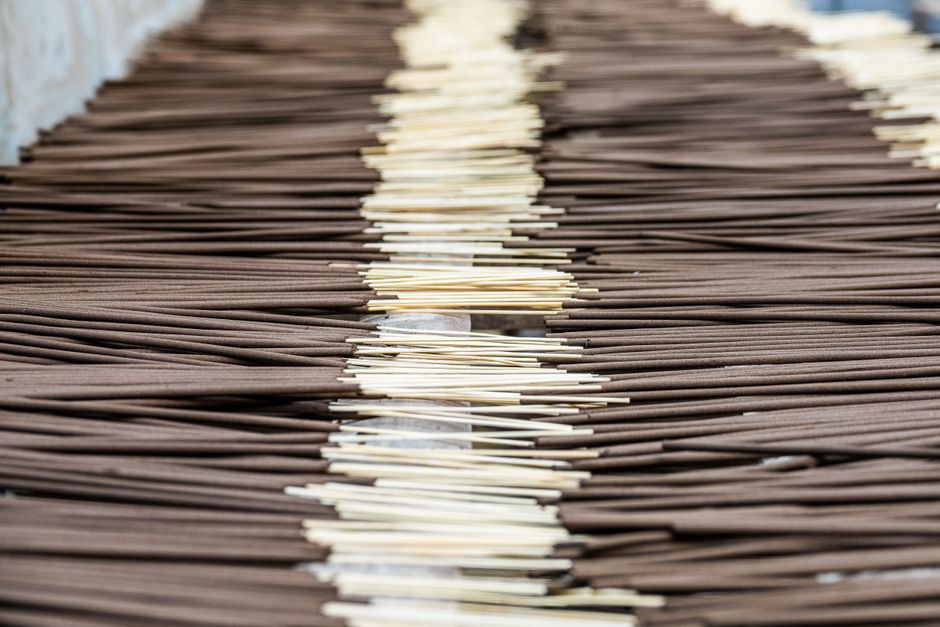
Importing incense sticks from India to Italy
A practical guide for Italy brands sourcing incense sticks from India — landed economics, duty access, freight transit and the government incentives that make Indian pricing 24% sharper than China.
Why brands import incense sticks from India
India is the world's dominant agarbatti producer, with Mysuru and Bengaluru anchoring a craft that is culturally native and labour-deep. China and Vietnam make incense, but not at India's scale or fragrance breadth, and not with the same hand-rolling tradition. For brands wanting authentic Indian incense with wide fragrance range, the origin is self-selecting.
Duty & market access into Italy
Italy applies the EU Common Customs Tariff — modest MFN duties and no China-style surcharge on Indian goods. Strong demand for artisan textiles, leather and home decor makes it a natural market, and a concluded EU–India FTA would cut duties further.
Italy is design-driven with sophisticated appreciation for leather, textile and craft, but also a strong domestic craft sector — so Indian suppliers win on price-plus-volume and on categories Italy under-produces. It is an EU market under the Common Customs Tariff, and buyers expect both aesthetic quality and proper material documentation.
What's specific to importing incense sticks
Incense clears as a consumer good at generally low duty; the compliance work is around fragrance and labelling. Aroma compounds should sit within IFRA guidance, and some markets expect SDS and allergen disclosure for the scented oils. Provide ingredient and fragrance documentation up front, since these are the details an importer's compliance team will ask for.
Getting it there
Shipments typically move FCL or LCL from Mundra or Nhava Sheva to Genoa, La Spezia, Gioia Tauro in 16–22 days by sea, or 3–6 days by air for samples and urgent top-ups. We manage freight booking, customs documentation and the certificate of origin end-to-end, so the goods clear cleanly on arrival.
Customs tip: Obtain an EU EORI number, apply CE marking where required, and budget for Italian import VAT (IVA), which is generally recoverable for VAT-registered importers.
Why India lands cheaper
Under RoDTEP, the Government of India refunds embedded duties worth 0.9% of FOB on incense sticks — a saving Indian factories pass into their quote. Combined with no Section-301 tariff exposure, that is most of why landed cost into Italy runs 24% below China.
Buyer FAQ
Importing incense sticks to Italy — FAQs
- Italy applies the EU Common Customs Tariff — modest MFN duties and no China-style surcharge on Indian goods. Strong demand for artisan textiles, leather and home decor makes it a natural market, and a concluded EU–India FTA would cut duties further.
- Ocean freight runs about 16–22 days from Mundra or Nhava Sheva to Genoa, La Spezia, Gioia Tauro, plus 3–6 days by air for samples and urgent top-ups.
- Yes — EU Common Customs Tariff (EU–India FTA in negotiation). We issue the matching certificate of origin so you can claim any preferential duty you qualify for.
- MOQs start around 1,000 units at an indicative FOB of $0.30–$3.00 per pack — roughly 24% below comparable China landed cost into Italy.
Import incense sticks from India to Italy, fully managed.
We handle sourcing, QC, freight and documentation end-to-end. You stay focused on growing the brand.